
Table of content
Wondering what type of wood is best for hardwood floors? Choosing the right type of wood flooring for your home is not a split-second decision—you need to consider available species and analyze them against your requirements. The Floors Are Us experts collected popular options to help you choose the perfect flooring option for your home. Keep reading to learn more about the most popular domestic and exotic hardwood species.
Popular Domestic Hardwood Species
Below, our team collected the most common domestic hardwood floor species chosen by our customers. Check out the detailed reviews of each to find the wood floor that fits you best.
Oak
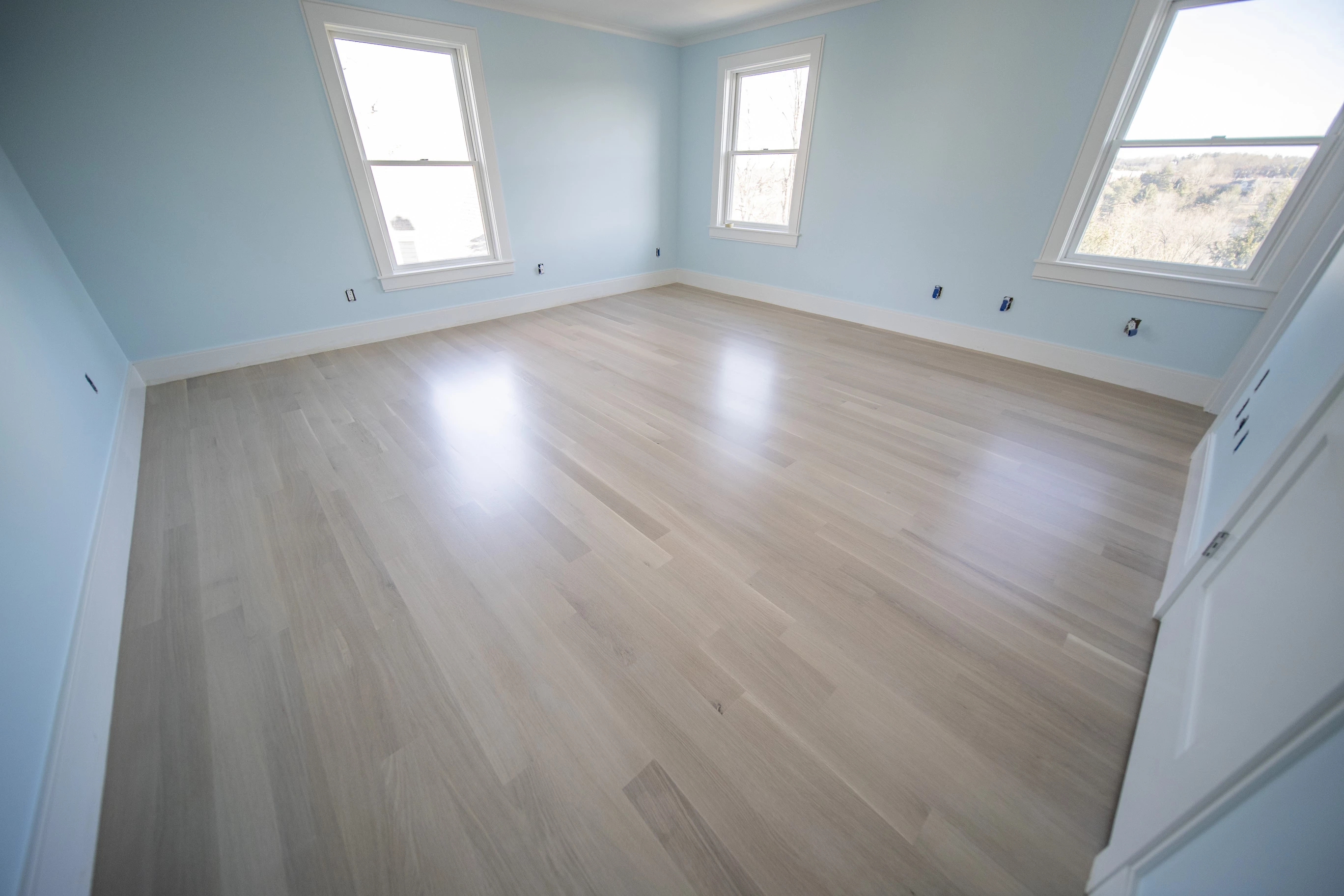
Oak is one of the best wood for hardwood flooring for your home. To learn about the pros and cons of this type of wood, see the table below:
Oak hardwood flooring | ||
Criteria | Advantages | Disadvantages |
Durability | Oak is one of the hardest natural wood types that can last a lifetime | Oak gets scratched easily; however, it also depends on the types of oak (white oak is harder than red oak) |
Aesthetics | Natural grain together with a rich selection of shades will enhance any interior | Prolonged exposure to direct sunlight can affect the color of your oak flooring |
Maintenance | Regular sweeping and mopping will be enough to keep your oak floors in a good condition | Spills and leaks can damage your oak hardwood severely unless wiped instantly |
Use specifics | Oak is an optimal choice for people with allergies, as it doesn’t trap dust and allergens, ensuring a better indoor air quality | Temperature and humidity fluctuations can result in structural changes in the planks |
Maple
Maple is another type of wood listed among the most popular hardwood floor species. Check out the table below to learn about the pros and cons of maple hardwood:
Maple hardwood flooring | ||
Criteria | Advantages | Disadvantages |
Durability | Maple ranks high according to the Janka hardness rating, making it a good choice for high-traffic areas, like hallways or living spaces | Maple is prone to scratches, which are particularly more noticeable on dark-colored flooring |
Aesthetics | Maple provides a smooth and modern look with a light grain pattern; its light color with a slight reddish-brown tint gives your space an airy feel | Sun exposure can affect the color, making it yellowish; besides, staining maple might be challenging due to its non-porous grain |
Maintenance | Maple is easy to clean and maintain. Use a broom and a damp mop for cleaning your maple hardwood | Maple hardwood is susceptible to dents and scratches, which may require frequent repair and refinishing |
Cherry
Cherry is also among the best wood species for hardwood flooring. Keep reading to learn more about the pros and cons of this type of wood:
Cherry hardwood flooring | ||
Criteria | Advantages | Disadvantages |
Durability | Cherry is a moderately durable hardwood; however, it gets harder over years | Cherry is prone to dents and scratches, meaning it’s not ideal for homes with pets or high-traffic areas |
Aesthetics | Cherry is known for its rich reddish tone that deepens over time; fits both traditional and modern interiors | Compared to oak, cherry has a more limited color range; its color can change unevenly under the sunlight exposure |
Maintenance | Cherry is easy to clean—regular sweeping and damp mopping will be enough for preserving the natural beauty of the cherry hardwood; besides, cherry is naturally resistant to water absorption | Scratches are more visible due to uniform grain pattern; you’ll have to use UV-protective finishes to minimize color changes |
Hickory
Hickory is another hardwood flooring species popular among our customers. Check the table below for more insight into the pros and cons of this type of wood.
Hickory hardwood flooring | ||
Criteria | Advantages | Disadvantages |
Durability | When it comes to hickory, it's hard to imagine a more durable material, making it a great choice for busy households or commercial spaces | High density complicates hickory installation and refinishing |
Aesthetics | Hickory offers a distinctive grain variation forming a bold, rustic look; this species is the best fit for traditional interiors | Plank to plank color inconsistency together with a strong grain pattern may be inappropriate for minimalist/modern interior designs |
Maintenance | Doesn’t require any specific maintenance, except regular sweeping and damp mopping; hickory flooring is resistant to daily wear and tear, meaning it needs less frequent refinishing compared to softer wood types | Is more difficult to repair due to its hardness |
Exotic Hardwood Species
After considering domestic hardwood flooring wood types, let’s also take a more detailed look at more exotic options. Though exotic species are used less often in households, they offer a premium quality and unmatched hardness. Keep reading for more insights on such exotic wood species as Brazilian cherry, teak, and Brazilian walnut.
1. Brazilian Cherry
Also known as Jatoba, Brazilian cherry is a durable, aesthetic, and easy to maintain. Check out the table below for more insights on this wood type:
Brazilian cherry hardwood flooring | ||
Criteria | Advantages | Disadvantages |
Durability | Brazilian cherry is more durable and hard than such domestic species as oak, maple, and cherry; it’s highly resistant to dents and scratches | The unmatched hardness of this wood type complicates the installation and sanding processes |
Aesthetics | Offers elegant and dynamic look with its deep reddish-brown tones | The bold color of the flooring may dominate the room, limiting interior design flexibility; sunlight exposure can affect the color inconsistently |
Maintenance | Brazilian cherry is naturally resistant to moisture damage, meaning it’s easy to care for—regular sweeping and damp mopping will be enough for maintenance | Refinishing may be costly due to the hardness of the material; sensitivity to UV light requires preventive measures, like rugs or window blinds |
2. Teak
Though teak isn’t among the most common hardwood floors chosen by our customers, this one is worth your attention. See the table below for more insight.
Teak hardwood flooring | ||
Criteria | Advantages | Disadvantages |
Durability | Exceptionally durable and resistant, ideal for households with fluctuating temperatures and humidity | Limited availability and high import expenses make this wood type an expensive investment |
Aesthetics | Timeless and elegant look; its warm golden-brown colors will enhance both classic and contemporary interiors | It needs to be properly maintained to avoid color fading; won’t fit those looking for a great variety of grain |
Maintenance | Its natural oils ensure high moisture resistance; this hardwood is easy to clean—damp mop your flooring and sweep it regularly | May require occasional oiling for preserving its natural shine |
3. Brazilian Walnut
Also known as Ipe, Brazilian walnut is another type of exotic hardwood. Below, you’ll find some insights on this wood species to help you decide whether it will be a good match for your home.
Brazilian walnut hardwood flooring | ||
Criteria | Advantages | Disadvantages |
Durability | One of the most durable hardwoods, exceeding oak and maple; it’s resistant to dents and scratches | The hardness of this species makes installing, sanding, and refinishing more complex and costly |
Aesthetics | This hardwood type offers deep brown hues, which create a luxurious look; ages gracefully | UV exposure can darken the color over time; might be too dark for small spaces |
Maintenance | Routine sweeping and regular mopping are enough for proper maintaining | May require oiling for advanced UV protection |
After considering different types of wood, you can decide which type of hardwood best fits your specific needs and requirements. Whether you choose one of the domestic wood species or opt for an exotic wood, the Floors Are Us professionals are always ready to fulfill your project from initial consultation to installation and post-installation care.
Factors to Consider When Choosing Your Wood Type
After considering overall criteria about hardwood floor types of wood, it’s now time to dive even deeper into such factors as costs, hardness scale, maintenance requirements, and installation specifics of each wood species.
Cost breakdown by wood type
Compare hardwood floor wood types by prices to gain a better understanding of the market:
Cost breakdown by wood type per sq ft | |
Oak | $4 – $8 |
Maple | $5 – $9 |
Cherry | $7 – $11 |
Hickory | $6 – $10 |
Brazilian cherry | $8 – $12 |
Teak | $9 – $13 |
Brazilian walnut | $8 – $12+ |
Wood Species Hardness Scale
Below, you can find hardwood flooring types of wood with their corresponding Janka hardness rating score:
Wood species hardness scale according to Janka hardness rating (lbf) | |
Oak | Red Oak: ~1,290 White Oak: ~1,360 |
Maple | ~1,450 |
Cherry | ~950 |
Hickory | ~1,820 |
Brazilian cherry | ~2,350 |
Teak | ~1,070 |
Brazilian walnut | ~3,680 |
Maintenance Requirements by Species
Maintenance and cleaning specifics are among the top factors you should consider when comparing different types of hardwood floors for your home. Check out the table for more insights:
Maintenance requirements | |
Oak | Regular sweeping and mopping; occasional refinishing |
Maple | Regular sweeping and damp mopping; avoid moisture |
Cherry | Regular sweeping and damp mopping; protect from UV exposure |
Hickory | Regular sweeping, occasional mopping; occasional refinishing |
Brazilian cherry | Minimal required care; regular cleaning; control UV exposure |
Teak | Regular cleaning; occasional oiling |
Brazilian walnut | Regular cleaning; rare refinishing |
Installation Considerations
Don’t forget about installation when it comes to choosing the perfect hardwood for your specific requirements. See the table below to compare installation specifics of different wood species:
Installation considerations | |
Oak | Easy installation; high stability |
Maple | Harder to cut and install; requires precision tools |
Cherry | Soft wood requiring gentle installation, make sure to handle gently |
Hickory | May require pre-drilling due to high density |
Brazilian cherry | Unmatched hardness requires professional installation |
Teak | Has to be installed with a special adhesive due to its oily surface |
Brazilian walnut | Extraordinary hardness requires professional installation |
Summing Up
Still hesitating about which hardwood floor is best for your home? Choosing the right wood type for your home is a decision that will stay with you for decades, and it’s completely normal to hesitate among several options. To make sure you find the solution that best fits you, contact a reliable flooring expert in your area, like Floors Are Us, and consult with seasoned professionals.